skip-to-main-content
Digitalizing Life in Dubai - dda
Digitalizing Life in Dubai
Dubai’s Digital Vision
Dubai’s digital vision, “Digitalizing Life in Dubai,” aims to create a trusted and resilient digital ecosystem that accelerates the digital economy and empowers a smart, connected society. Through this vision, Dubai has launched a wide range of initiatives to transform government services, the economy, urban planning, transportation, healthcare, and education - enhancing quality of life and driving sustainable digital transformation across all sectors.
Government and Public Services
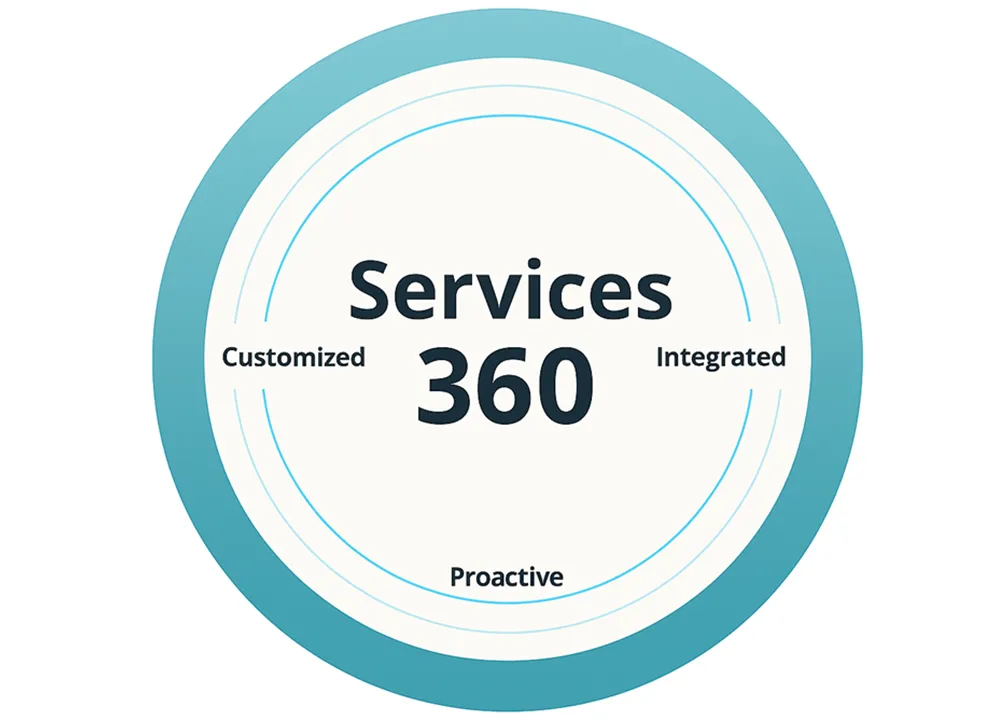
Services 360 Policy
‘Services 360’ lays down a new vision and roadmap for the future of services in Dubai and provides a seamless, proactive, customized, and integrated system that caters to customers’ expectations and needs. Guided by eight key principles - including digital identity (UAE PASS), proactive service delivery, unified channels, and public-private partnerships - the policy aims to achieve 100% proactive and automated services, 95% digital adoption, and 90% integrated service delivery. Its implementation, led by the Dubai Model Center and Digital Dubai Authority, is expected to save AED 1 billion annually, eliminate nine million physical visits, and free up 300,000 working hours each year - advancing Dubai’s vision of a fully digital, efficient, and customer-centric government.
Dubai Now App
Dubai Now is one-stop gateway to city services - the first and only unified application by the Government of Dubai that provides access to over 350 government and private sector services from more than 50 entities. The app offers a one-stop digital platform for all government interactions, enabling users to complete their transactions seamlessly, securely, and conveniently anytime and anywhere.
To ensure a smooth and personalized experience, users can log in to the Dubai Now app using their UAE PASS, which provides a secure single sign-on and simplifies access to all available services. The app is continuously enhanced with new services and features, saving you time and effort so you can focus on what truly matters.
UAE Pass
UAE PASS is the national digital identity for citizens, residents, and visitors, enabling secure access to a wide range of federal and local government services as well as private sector platforms across the UAE. It allows users to sign in, verify their identity, and digitally sign documents from anywhere, eliminating the need for physical visits or paper-based transactions.
With UAE PASS, users can enjoy a unified and trusted digital experience across all participating entities in the UAE. The app provides a secure single sign-on that simplifies access to hundreds of online services, ensuring privacy and data protection through advanced encryption and authentication mechanisms. UAE PASS is integrated with almost all government services and major private sector platforms across the UAE. It was developed through a strategic partnership between the Digital Dubai Authority, the Abu Dhabi Department of Government Enablement, and the Telecommunications and Digital Government Regulatory Authority (TDRA).
Dubai Paperless Strategy
In December 2021, Dubai successfully achieved the objectives of the Dubai Paperless Strategy, launched in 2018, marking its transformation into the world’s first paperless government and reinforcing its position as a leading digital capital. All internal and external transactions and procedures within the Government of Dubai are now 100% digital, managed through comprehensive digital government service platforms that ensure efficiency, integration, and sustainability across all entities.
Economy and Business
Dubai Cashless Strategy
Dubai Cashless Strategy is a comprehensive initiative led by Dubai Finance to achieve 90% cashless transactions across government and private sectors by 2026. The strategy is aligned with the Dubai Economic Agenda (D33) and Digital Dubai’s vision of Digitalizing Life in Dubai, aiming to strengthen Dubai’s position as a global digital capital. Built on three key pillars - Digital Governance, Digital Innovation, and Digital Society - the strategy seeks to establish a secure, efficient, and inclusive digital payment ecosystem that drives economic growth, fosters financial innovation, and supports a sustainable digital economy.
Infrastructure and Urban Planning
DEWA Smart Grid
DEWA launched its first Smart Grid Strategy (2014–2035) to enhance infrastructure and service efficiency and successfully achieved its initial goals. In 2021, DEWA introduced an updated strategy focusing on a value-driven approach, transitioning its ten programs into six main governance themes: Foundational Capabilities, Grid Automation, Smart Energy Solutions and Green Mobility, Smart Water, Smart Grid Artificial Intelligence, and Innovative Value-Added Services.
Dubai Electricity and Water Authority (DEWA) is leading Dubai’s transformation into one of the smartest cities in the world through its comprehensive Smart Grid Program - an advanced electricity and water infrastructure designed for automation, interoperability, and intelligent decision-making. With total investments of AED 7 billion, the initiative is aimed to provide a state-of-the-art, integrated electricity and water infrastructure that uses advanced, interconnected technologies to enable two-way communication, real-time monitoring, and automation - so services are delivered seamlessly 24/7 with higher reliability and efficiency. It is designed to optimize the balance between supply and demand, reduce technical losses and carbon emissions, integrate renewables and storage, enhance security, and improve customer experience and happiness.
Connectivity and Internet Speed

5G network
Dubai benefits from robust 5G network coverage, which cover all major urban areas. According to the Telecommunications and Digital Government Regulatory Authority (TDRA), 5G network now span more than 98.5% of the UAE’s populated areas.
Both major providers - Etisalat (e&) and du - offer interactive coverage maps for users to verify 5G availability at specific locations in Dubai and across the country.
The strong footprint ensures high-speed, low-latency connectivity throughout major urban areas, supporting Dubai’s ambition to become a fully digital, smart city.

6G Roadmap
The UAE’s 6G Roadmap, unveiled by the Telecommunications and Digital Government Regulatory Authority (TDRA) in 2024, outlines a comprehensive strategy to position the UAE as a global leader in next-generation connectivity. Building on the nation’s success with 5G, the roadmap focuses on advancing research, standards, and technical specifications for the International Mobile Telecommunications 2030 (IMT-2030) framework, also known as 6G. It aims to create a digitally integrated and intelligent communication ecosystem by leveraging artificial intelligence, network virtualization, and advanced sensing technologies. The plan envisions transformative applications such as real-time transmission of human senses, enhanced robotics, autonomous transportation, and remote healthcare services.
The UAE targets a transition to 6G by 2030, ensuring sustainable growth, improved spectrum efficiency, and alignment with national visions - UAE Centennial 2071 and We the UAE 2031 - while contributing to global sustainability by reducing carbon emissions and energy consumption.
High-Speed Internet Coverage
Dubai enjoys high-speed broadband internet, supported by a robust telecommunications infrastructure established across the UAE. As of September 2025, the UAE recorded an average fixed broadband download speed exceeding 334 Mbps, ranking among the top five countries globally. In April 2025, the UAE achieved a new global record in fiber-to-the-home (FTTH) network coverage, reaching 99.5%, and maintaining its position as the world’s top-ranked country since 2016, according to the FTTH Council Europe’s annual report based on 2024 data.
Transportation and Mobility

Self-Driving Transport Strategy
Dubai Self-Driving Transport Strategy aims to make 25% of all transportation trips in Dubai smart and driverless by 2030, reflecting the emirate’s commitment to innovation and sustainability in mobility. Building on global advancements in autonomous transport, the strategy envisions a comprehensive, multi-modal self-driving ecosystem covering metro, shuttles, buses, and other transport modes as part of Dubai’s Smart City vision. It is designed to enhance safety, reduce congestion and mobility costs, cut emissions, and boost productivity and happiness, with the benefits estimated at over AED 22 billion annually.

Aerial Taxi
Dubai Flying Taxi represents a major leap in the emirate’s journey toward smart and sustainable mobility, marking the region’s first successful test flight of the Joby Aerial Taxi in June 2025. Developed in partnership between Dubai’s Roads and Transport Authority (RTA) and Joby Aviation, the aerial taxi embodies Dubai’s vision to integrate advanced air mobility within its smart transport ecosystem. The fully electric, vertical take-off and landing (VTOL) aircraft offers zero-emission, low-noise travel, accommodating four passengers and reaching speeds of up to 320 km/h. Designed to reduce travel times and enhance connectivity between key destinations - such as reducing the trip from Dubai International Airport to Palm Jumeirah to just 12 minutes.
Healthcare and Wellbeing

NABIDH
NABIDH is a major initiative in Dubai’s journey toward digitalizing life and building a smart city, particularly in healthcare sector. Led by the Dubai Health Authority (DHA), NABIDH securely connects public and private healthcare providers across the emirate, enabling the exchange of electronic medical records through a unified digital platform. This integration enhances the quality, safety, and efficiency of healthcare delivery by giving authorized professionals instant access to accurate patient information, supporting informed decision-making and continuity of care. As part of Dubai’s broader digital transformation, NABIDH reflects the emirate’s vision of harnessing data and technology to improve well-being, public health outcomes, and overall quality of life for all residents and visitors.
Telehealth
Education and Human Development
Digital School
The Digital School, launched by the Mohammed bin Rashid Al Maktoum Global Initiatives (MBRGI), is a flagship project that embodies Dubai’s vision of digitalizing life by providing certified online education to students who lack access to formal schooling, particularly in refugee camps and marginalized communities worldwide. Supported by the Alliance for the Future of Digital Learning, the initiative integrates AI-powered, game-based, and interactive learning modules to deliver flexible, engaging education in subjects such as Math, Science, Arabic, Computer Studies, and English. Blending live and self-paced virtual classes, the Digital School promotes inclusion and quality education regardless of social or economic background. Since its launch in November 2020 with 20,000 students, the school has aimed to expand its reach to one million learners by 2026.

Artificial Intelligence in School Curriculum
As part of Dubai’s and the UAE’s broader vision of digitalizing life and building a knowledge-based digital economy, the Ministry of Education has announced the integration of Artificial Intelligence (AI) as an official subject in public-school curricula from kindergarten to Grade 12, beginning in the 2025–2026 academic year. This landmark initiative aims to equip students with essential AI knowledge and practical skills, enabling them to understand, apply, and innovate using technology in daily life. Covering seven core areas - from data and algorithms to ethical AI and real-world applications - the program ensures that every graduate is digitally literate and prepared to contribute to the UAE’s AI-driven transformation.
Security and Governance
Smart Police Stations (SPS)
The Dubai Police’s Smart Police Station (SPS) exemplifies the “Digitalizing Life in Dubai” vision by providing a fully automated, self-service law-enforcement facility that operates 24/7 and caters to a technologically diverse community. The SPS enables residents and visitors to carry out key police transactions - such as filing a report, paying fines, obtaining certificates - without interacting with staff, offering services in multiple languages and via intuitive touchscreens and kiosks.

Was this content helpful