skip-to-main-content
Dubai Economy - dda
Dubai Economy
Dubai: A Premier Global Hub for Economic Growth
Dubai has promoted its position as a cosmopolitan global hub for finance and commerce, distinguished by its strategic geographic location and visionary leadership. Its evolution into one of the world's most growing cities presents a compelling proposition for global investors seeking a stable, high-growth environment. Dubai's success is not a matter of chance; it is the direct result of a meticulously diversified economic landscape and a clear, forward-looking strategy for sustainable prosperity.
The following key facts provide a snapshot of the Emirate's scale and economic vitality:
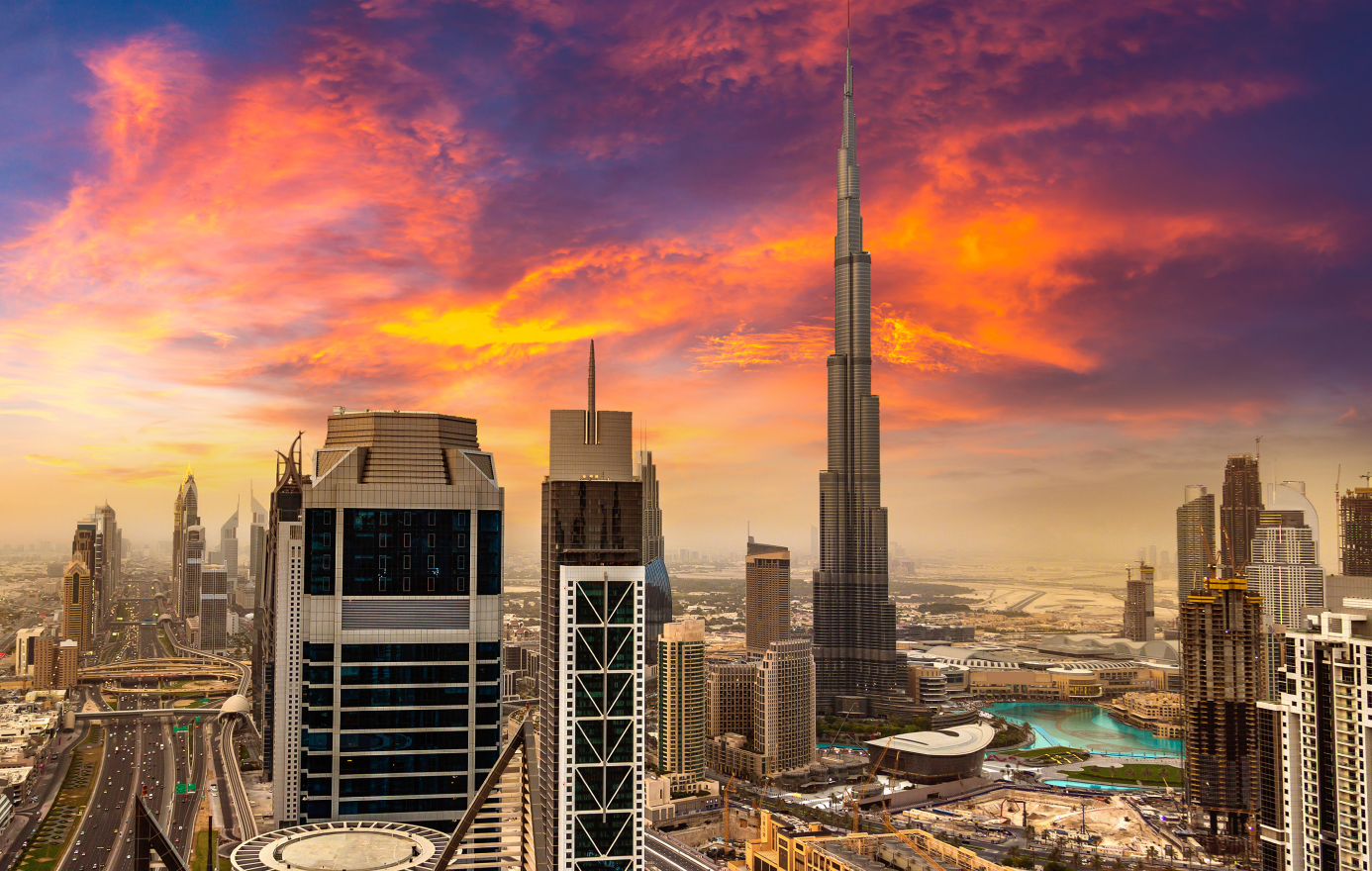
Geographic Position: Dubai is the second largest Emirate in the UAE, strategically located on the southwest corner of the Arabian Gulf.
Area: The Emirate covers an area of 4,114 square kilometers.
Population: The estimated population reached 4.248 million in 2024.
Economic Contribution: Dubai contributes 25% of the UAE's real Gross Domestic Product (GDP) as of 2024.
GDP Snapshot: The Emirate's real GDP was valued at $120.6 billion USD in 2024, with a growth rate of 3.2%.
Economic Diversification: Over 95% of Dubai's GDP is non-oil based, demonstrating a highly resilient and diversified economy.
A Strategic Vision for a Sustainable Future
Dubai's sustained growth and remarkable economic performance are engineered by deliberate, long-term strategic planning designed to secure a prosperous and sustainable future for its partners and investors. These strategic plans offer investors exceptional predictability, aligning infrastructure and economic targets for the decades ahead.
Dubai 2040 Urban Master Plan
Launched in March 2021, this plan outlines a detailed framework for sustainable urban development with a central focus on enhancing quality of life. Key objectives to be achieved by 2040 include:
Doubling the size of green and recreational spaces.
Ensuring nature reserves and rural natural areas constitute 60% of the Emirate’s total area.
Increasing land area for hotels and tourist activities by 134%.
Expanding land area for commercial activities to 168 square kilometers.
Increasing land allocated for education and health facilities by 25%.
Extending the length of public beaches by 400%.
Dubai Economic Agenda (D33)
Announced in January 2023, the D33 agenda sets the ambitious goal of doubling the size of Dubai's economy and solidifying its position among the world's top three global cities. The agenda's primary economic targets by 2033 are:
Increase foreign trade for goods and services to AED 25.6 trillion.
Increase total foreign direct investment to AED 650 billion.
Raise government expenditures to AED 700 billion.
Increase private sector investments to AED 1 trillion.
Commitment to Green and Sustainable Initiatives
Dubai has embedded sustainability into its core strategic vision, launching numerous initiatives to promote environmental stewardship and reduce its ecological footprint. Key programs include:
Dubai Clean Energy Strategy 2050: A long-term plan to generate 100% of the Emirate's power from clean sources.
Mohammed bin Rashid Al Maktoum Solar Park: One of the world's largest renewable energy projects.
Zero-emission Public Transport by 2050: A commitment to creating a fully sustainable public transportation network.
Dubai Paperless Strategy: A plan to digitize government services and eliminate paper consumption.
The Engine of Growth: A Diversified Economic Landscape
Through a successful strategy of diversification away from oil dependence, Dubai has cultivated a powerful non-oil economy, further amplified by a network of specialized Free Zones that offer powerful incentives to international businesses. The interplay between these sectors creates a synergistic ecosystem that supports sustained growth and global competitiveness.
Wholesale and Retail Trade
Contributing AED 112.1 billion to Dubai's real GDP, the wholesale and retail sector is a foundational pillar of the economy. Renowned globally as a premier shopping destination, the Emirate offers diverse retail experiences that attract a wide international audience, bolstered by major events like the Dubai Shopping Festival. The sector’s growth is amplified by Dubai's strategic location, which facilitates highly efficient trade and supply chain activities.
Real Estate Activities and Construction
For investors, the real estate and construction sector represents a landmark opportunity, with a proven track record of delivering iconic, high-value assets that have contributed AED 63 billion to the real GDP. Recognized for its skyline featuring architectural marvels like the Burj Khalifa and Palm Jumeirah, the sector is a testament to Dubai’s forward-looking vision and a primary magnet for significant international investment.
Transportation and Storage
Contributing AED 51.9 billion to the real GDP, this sector leverages state-of-the-art infrastructure to position Dubai as an undisputed global trade and logistics hub. Strategic assets like Jebel Ali Port—the largest in the Middle East—and Dubai International Airport establish the Emirate as a prominent global transport nexus. Supported by leading companies like Emirates Airlines and the logistics operations in the Jebel Ali Free Zone, this sector ensures seamless global market connectivity.
Financial and Insurance Activities
As a major international financial center, this sector contributes AED 51.5 billion to the real GDP and is critical to achieving the D33 agenda's goal of ranking among the top three global cities. The Dubai International Financial Centre (DIFC) anchors a thriving ecosystem for banking, asset management, and insurance, connecting regional markets with global capital flows and cementing Dubai's status as an essential financial hub.
Manufacturing
The manufacturing sector is a key driver of Dubai's economic diversity, contributing AED 37.6 billion to the real GDP. Anchored by specialized industrial zones like Dubai Industrial City and Jebel Ali Free Zone, the sector is focused on innovation and high-value production.
World-Class Infrastructure Enabling Global Commerce
A primary driver of Dubai's economic success is its sustained, large-scale investment in state-of-the-art infrastructure. This world-class foundation of transportation, trade, and utility networks enables unparalleled global connectivity and commerce, providing a critical competitive advantage for businesses and investors operating within Dubai.
Leading Aviation and Surface Infrastructure
Dubai has established itself as a global leader in aviation while continuously enhancing its comprehensive surface transport network.
Aviation: Dubai has ranked #1 globally in international passenger traffic since 2015. Its two strategically positioned airports have a combined capacity of 126 million passengers annually.
Surface Transport: The Emirate has significantly expanded its road network, increasing its length by 40% since 2016 to reach 18.9 thousand KM as of 2024. In the same period, Dubai Metro passenger trips have grown by 98.7% to reach 380 million.
Global Trade and Maritime Hub
The Emirate's ports are central to its role as a global trade gateway, connecting markets across the world. This maritime dominance is the foundational enabler for the thriving Wholesale and Retail Trade sector, providing unparalleled supply chain efficiency.
Jebel Ali Port: The largest port in the Middle East, handling 15.5 million TEU shipping containers in 2024.
Rashid Port: A leading cruise tourist destination in the Middle East.
DP World: Dubai is home to the world’s largest container terminal operator, managing a global network of ports and terminals.
Reliable and Sustainable Utilities
Dubai guarantees the stability of its power and water utilities through the Dubai Electricity and Water Authority (DEWA), which is recognized for its exceptional performance.
Global Recognition: DEWA achieved a #1 global ranking for getting electricity in the World Bank's 2020 report.
Capacity and Reliability: For industrial and commercial operations, DEWA's 37% capacity buffer in 2024 translates directly into unparalleled energy security and operational reliability, a critical advantage in the region.
Clean Energy: As of 2024, clean energy constitutes 20% of Dubai’s energy mix, advancing the Dubai Clean Energy Strategy's target of 100% clean energy by 2050.
Dubai's Sovereign Investment Arms
At the core of Dubai's financial strategy are its sovereign investment arms, the Investment Corporation of Dubai (ICD) and the Dubai Investment Fund (DIF). These institutions serve as pillars of the Emirate's long-term economic stewardship, managing a diverse portfolio of strategic assets to generate sustainable returns and ensure financial stability for investors.
Investment Corporation of Dubai (ICD)
Established in 2006, the ICD is the principal investment arm of the Government of Dubai. Its primary mandate is to consolidate and manage the government's portfolio of commercial companies, providing strategic oversight to maximize long-term value. The ICD's portfolio is concentrated in key sectors including:
Banking & Financial Services: Including major institutions like Emirates NBD, Commercial Bank of Dubai, National Bonds Corporation, and Dubai Islamic Bank.
Transportation: Focused on the strategically vital aviation industry, with portfolio companies such as Emirates, dnata, DAE, and flydubai.
Oil & Gas: Including the Emirates National Oil Company (ENOC).
Dubai Investment Fund (DIF)
Established in 2023, the DIF focuses on promoting Dubai's sustainable development, enhancing the government's financial stability, and diversifying income sources through investments in key developmental projects. Its portfolio includes strategic assets in the following sectors:
Infrastructure: Parkin PJSC (Dubai's largest public parking operator) and Salik PJSC (the exclusive road toll system).
Energy: Dubai Electricity and Water Authority (DEWA) PJSC.
Transportation: Dubai Taxi Company PJSC.
Logistics: Dubai World Corporation.
Key Indicators of a Thriving Economy
The strength of Dubai's economy is demonstrated by its key performance indicators, which offer tangible proof of a stable, growing, and attractive environment for residents, tourists, and investors. The positive trends across all major metrics underscore the success of the Emirate's strategic vision.
Key economic indicators for 2024 highlight this positive trajectory:
Tourism:
International Visitors (2024): 18.72 million
Year-over-Year Growth (2024): 9%
Inflation:
Consumer Price Index (CPI) (2024): 3.3%
Employment:
Unemployment Rate (2024): 0.90%
Population Growth:
The main driver of Dubai’s population growth is the influx of expatriates who have found the city an ideal place to work and live, thanks to its sustained and well-supported economic growth.
Total Population (2024): 3.8 million
Growth Since 2020: 13%
Public Finances (Budget 2025):
Budgeted Total Revenue: AED 97.7 billion
Expected Total Expenditure: AED 86.2 billion
Resulting Budget Surplus: AED 11.4 billion
Foreign Direct Investment (FDI):
Dubai's ability to attract significant FDI is amplified by its network of specialized Free Zones, such as JAFZA and DIFC. These zones offer powerful incentives, including tax exemptions and streamlined regulations, creating an exceptionally business-friendly environment.
Key enabling Free Zones include:
Was this content helpful